
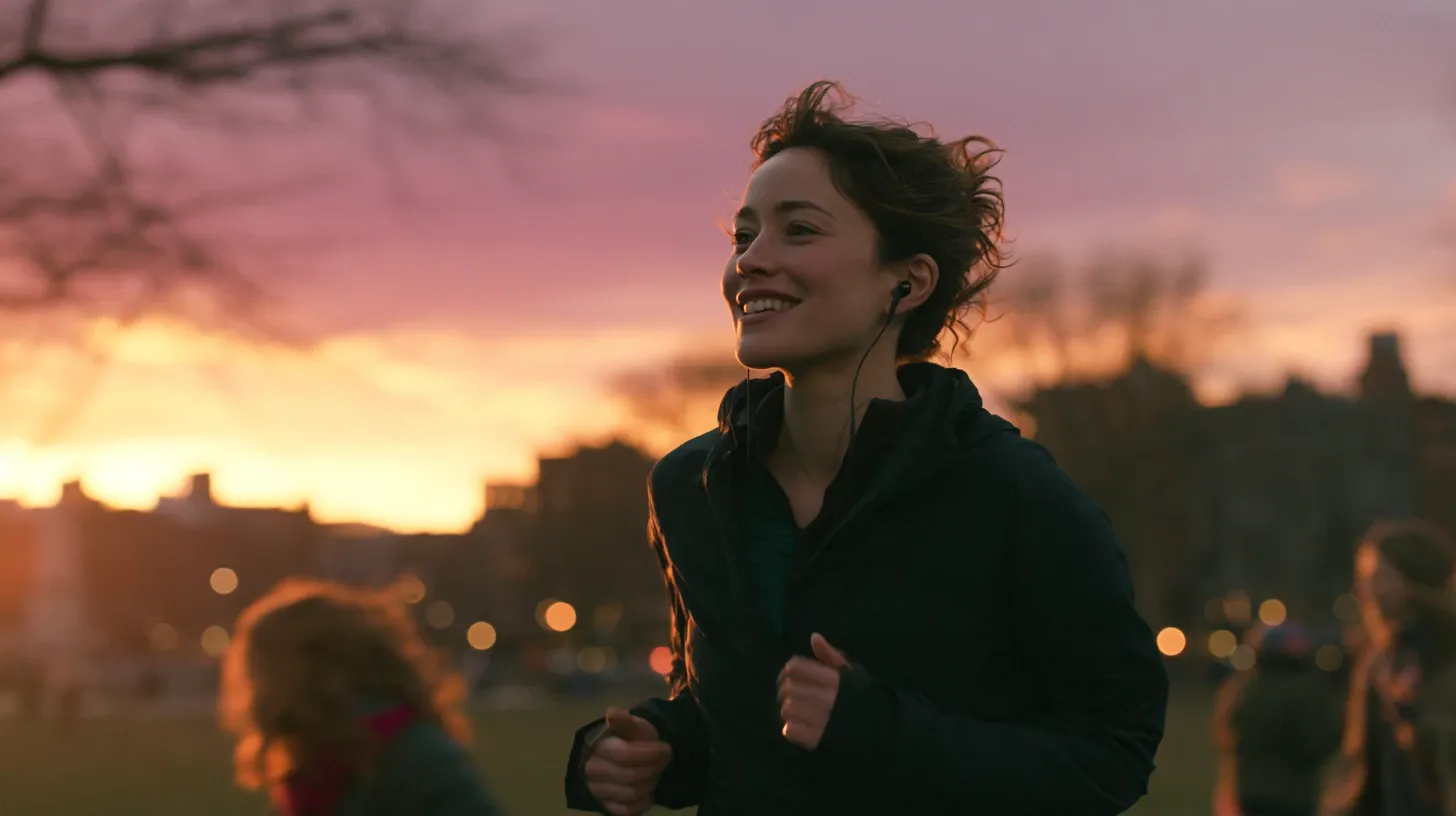
Walking to the beat: what 100 steps per minute do for you
About 100 steps per minute is enough to turn a walk into moderate exercise. With music at that tempo, 9 out of 10 people got there.
Walking is one of the most complete forms of exercise there is, and one of the easiest to stick with. But to count as moderate physical activity, the kind health guidelines call for, your pace needs some purpose. And there’s a simple number for that.
The magic number: about 100 steps per minute
In a 2019 study, researchers in the United States (Tudor-Locke and colleagues) measured the energy expenditure of 76 adults walking at different speeds. The takeaway is very practical: at around 100 steps per minute, walking is already moderate. That cutoff was right in 91% of cases.
A 2009 study of 97 adults (Marshall and colleagues) arrived at the same number. For vigorous walking, the benchmark rises to about 130 steps per minute.
Music gets you there
Now for the good part. Also in 2019, another group (Perry and colleagues) asked 20 adults to walk in step with the beat of music played at 80, 100 and 125 beats per minute.
Everyone was able to keep up. And with the music at 100 BPM, 90% of people reached moderate intensity, without counting steps or checking the clock. Just by following the music.
A review of 34 studies (Ghai and colleagues, 2018) backs this up: with a rhythmic sound to follow, people walk faster, with longer strides and a higher cadence, both young adults and healthy older adults.
How OmniBeat uses this
In walking workouts, every beat is a step:
- the warm-up starts at a comfortable pace;
- in the effort blocks, the music picks up to a brisk-walking tempo;
- during recovery, it slows down so you can catch your breath.
If the pace gets too tough, one tap slows the music down, without changing the pitch of the vocals. And the First Steps level of the journey starts with exactly that: rhythmic walks.
Walking to the beat turns a lap around the park into a real workout.
100 steps per minute is a benchmark for healthy adults, and every body is different. If you have a health condition, talk to a professional before increasing the intensity.
Sources
- Tudor-Locke C et al. Walking cadence (steps/min) and intensity in 21–40 year olds: CADENCE-adults. International Journal of Behavioral Nutrition and Physical Activity, 2019;16:8. doi:10.1186/s12966-019-0769-6
- Marshall SJ et al. Translating physical activity recommendations into a pedometer-based step goal: 3000 steps in 30 minutes. American Journal of Preventive Medicine, 2009;36(5):410–415. doi:10.1016/j.amepre.2009.01.021
- Perry DC et al. Using music-based cadence entrainment to manipulate walking intensity. Journal of Physical Activity and Health, 2019;16(11):1039–1046. doi:10.1123/jpah.2019-0097
- Ghai S, Ghai I, Effenberg AO. Effect of rhythmic auditory cueing on aging gait: a systematic review and meta-analysis. Aging and Disease, 2018;9(5):901–923. doi:10.14336/AD.2017.1031